Skip to content
Skip to content
  • Contact
  • Home
  • Search Icon

MEMORY LANE # 17 : TARZAN APPRECIATION LUNCH PART 3 – The Limo Ride – November 11th 1998

MEMORY LANE # 17 : TARZAN APPRECIATION LUNCH PART 3 – The Limo Ride – November 11th 1998

October 22, 2026 Mark Pudleiner

Mark captures a rare moment as he joins Tarzan supervising animators Ken Duncan (Jane), Mike Surrey (Terk), Bruce Smith (Kerchak), and Chris Wahl (Flynt & Mungo), along with Assistant Production Manager for Animation Tone Thyne. Riding in a state‑of‑the‑art studio limo — complete with a VHS deck — the group travels from the Feature Animation building in Burbank to the Tarzan Appreciation Lunch in Hollywood. A rare, relaxed, behind‑the‑scenes moment with some of the team behind Disney’s Tarzan.

TARZAN APPRECIATION LUNCH PART 3 – The Limo Ride

SHOW NOTES :

Riding in the Limo :

Ken Duncan – Supervising Animator : Jane
DUNCAN STUDIO > LINK
IMDB > LINK
LinkedIn > LINK

Mike Surrey – Supervising Animator : Terk
IMDB > LINK
LinkedIn > LINK

Bruce Smith – Supervising Animator : ” Kerchak” and “Baboons & Baby Baboons ”
IMDB > LINK
LinkedIn > LINK

Chris Wahl – Supervising Animator : Flynt & Mungo
IMDB > LINK

LinkedIn > LINK

Tone Thyne – Assistant Production Manager for Animation
IMDB > LINK
LinkedIn > LINK

Mark Pudleiner – Additional Animator
IMDB > LINK
LinkedIn > LINK


The Hollywood Athletic Club – Some History and Notes
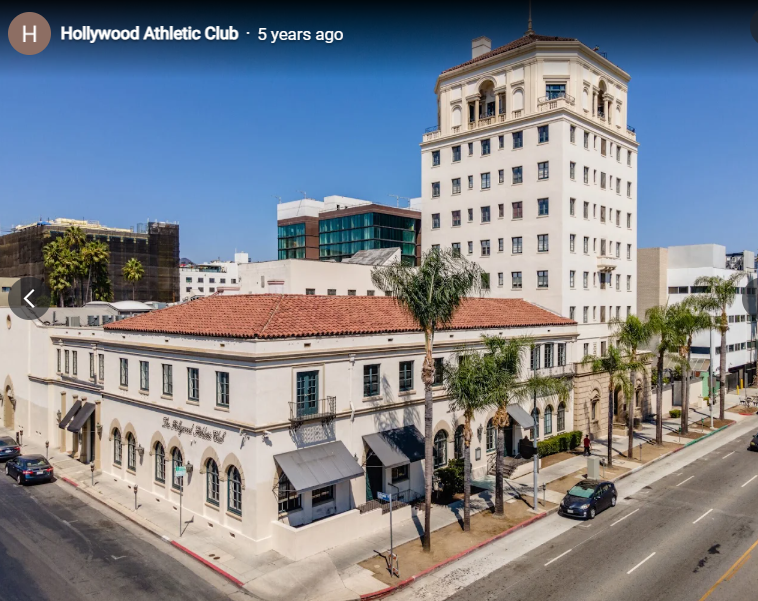
The Hollywood Athletic Club, located at 6525 Sunset Boulevard in Los Angeles, California, is a historic 1924 landmark. Designed by Meyer & Holler and founded by icons like Charlie Chaplin and Rudolph Valentino, it serves as an event space and office building

During the Golden Age of Hollywood, the Hollywood Athletic Club served as the unofficial headquarters, playground, and sanctuary for the world’s biggest movie stars. Because it was a private club, it allowed celebrities to escape the paparazzi, work out, drink, and socialize away from the public eye.

The roster of its golden-age members reads like a “Who’s Who” of cinematic history :

🌟 Notable Residents & High-Profile Antics

Tarzan at the Pool: Six-time Olympic medalist swimmer and iconic Tarzan actor Johnny Weissmuller was a fixture at the club’s massive Olympic-sized indoor swimming pool, using it to maintain his physique.

Walt Disney’s Recovery Sanctuary: In the early years of building his animation empire, a young Walt Disney suffered from severe physical and mental exhaustion. He reportedly used the club’s top-tier gym and spa facilities to rest, exercise, and recover his strength.

Rudolph Valentino’s Bachelor Pad: The legendary silent film heartthrob kept a permanent, private bachelor suite at the club. He used it to escape his overwhelming fame and the constant attention of adoring fans.

John Wayne’s Door-Punching Contests: “The Duke” was a regular fixture at the club. According to local lore, he once had to pay a hefty bill for property damage after turning a drunken game of punching holes through the club’s doors into a competition among members.

Notes courtesy of YouTube·L.A. in a Minute

Views: 133
Meeting with Mathieu 16 – GHOST IN THE SHELL – 2026

Meeting with Mathieu 16 – GHOST IN THE SHELL – 2026

October 5, 2026 Mark Pudleiner

In Meeting with Mathieu Episode 16, Mathieu shares new work from one of his favourite Japanese animation studios, Science SARU. Together they look at moments from the studio’s 2026 TV adaptation of Ghost in the Shell, noting how the art direction honours the original 1995 character designs created at Production I.G. They wrap up by exploring Science SARU’s website and discussing the studio’s production approach, craftsmanship, and the reputation they’ve built over their 13 years in the industry.

GHOST IN THE SHELL – 2026 – Science SARU Studio

Show Notes :

Watch THE GHOST IN THE SHELL > LINK


SCIENCE SARU LINKS :

Science SARU – STUDIO LINK > LINK

SCIENCE SARU Instagram > LINK

SCIENCE SARU X > LINK


From the Studio :

At Science SARU, we aspire to create bold, groundbreaking animation that redefines creativity
 by seamlessly blending logic and emotion, business and art, and global and local perspectives.

Science SARU is an award-winning animation studio with a diverse and talented staff.
Our creative mission is to explore new avenues of expression through telling authentic stories.

Science SARU Inc. Established February 4th, 2013
CEO : Masanori Fujita
Number of Employees : 73 employees (as of October, 2026)
Address: Musashino-shi, Tokyo, Japan

Contact :
info@sciencesaru.com

Inquiries about recruitment
recruit@sciencesaru.com


Science SARU ‘ Ghost in the Shell ‘ Production Notes :

1. A return to Masamune Shirow’s original manga :
Science SARU emphasized that this adaptation is not based on Oshii’s 1995 film or SAC’s procedural tone
— it is a direct, energetic, manga‑faithful reset.
*Note courtesy of cartoonbrew.com

2.Episodic “case‑file” structure :
The series uses a case‑of‑the‑week format, presented as reconstructed police files from 2029. This mirrors the manga’s structure and allows for high‑density worldbuilding.
*Note courtesy of cartoonbrew.com

3. “Hand‑drawn humanity” as a core philosophy :
Director Mokochan stated that the team wanted viewers to feel the human touch behind the animation — even in a cybernetic world. He showed the full pipeline from storyboard → layout → rough → clean → composite to emphasize the hand‑drawn nature of the show.
*Note courtesy of cartoonbrew.com

4. High‑energy visual identity
Mokochan described the manga as having “so much energy,” and the studio’s mission was to translate that into animation. This led to :
– rapid camera movement
– glitch‑based transitions
– visceral environmental effects (blood, mud, debris hitting the lens)
*Note courtesy of cartoonbrew.com

5. A “victory lap” for Science SARU
Producers Kohei Sakita and Kengo Abe expressed that being chosen to adapt Ghost in the Shell felt like a career milestone for the studio.
*Note courtesy of cartoonbrew.com

6. Why Science SARU was selected
Bandai Namco Filmworks stated they wanted a studio that could :
“take the best elements of the Ghost in the Shell manga and express them through the fundamental joy of animation.”
*Note courtesy of cartoonbrew.com

7. Radical tonal shift from previous adaptations
The new series intentionally pivots away from the stoic, philosophical tone of Oshii and SAC. Instead, it embraces:
– comedy beats
– kinetic pacing
– manga‑accurate character dynamics
*Note courtesy of Hypebeast.com

8. Science SARU’s experimental lineage
Press notes highlight SARU’s reputation for expressive, bold, “loose” animation — a lineage stretching from Space Dandy to Devilman Crybaby to Scott Pilgrim Takes Off. This experimental DNA is intentionally applied to Ghost in the Shell.
*Note courtesy of Hypebeast.com

9. High‑profile artistic collaborations
The studio brought in major collaborators :
– Hajime Sorayama — metallic chrome title logo
– King Gnu — opening theme
– Millennium Parade — ending theme (their first release after a two‑year hiatus)
*Note courtesy of Hypebeast.com

10. Official press notes emphasize legacy and cultural impact
The promotion team frames the series as the newest chapter in a franchise that has influenced “countless creators around the world” since 1989.
*Note courtesy of SciFijapan.com


THE GHOST IN THE SHELL – Inside the Anime Studio | Prime Video

Ever wondered how anime gets made ?
Step inside Science SARU, the studio bringing THE GHOST IN THE SHELL to life. 300 to 400 creators work on every single episode!
Discover the pressure, the challenges, and the deep respect for the original manga that drove this team.
Narrated by #MaayaSakamoto, the voice of protagonist Motoko Kusanagi in the original Japanese version.
Watch this and you’ll enjoy THE GHOST IN THE SHELL even more.
Now streaming exclusively!


Science SARU Adventure Time episode “ Food Chain.”

The episode “Food Chain” (Adventure Time, Season 6 Episode 7, 2014) was written, storyboarded, and directed by Masaaki Yuasa.
Eunyoung Choi served as creative director.
It was animated by Science SARU, the Tokyo studio founded by Yuasa and Choi.
According to Science SARU’s studio history, “Food Chain” was their first animation project, marking their debut as a studio.


Views: 237
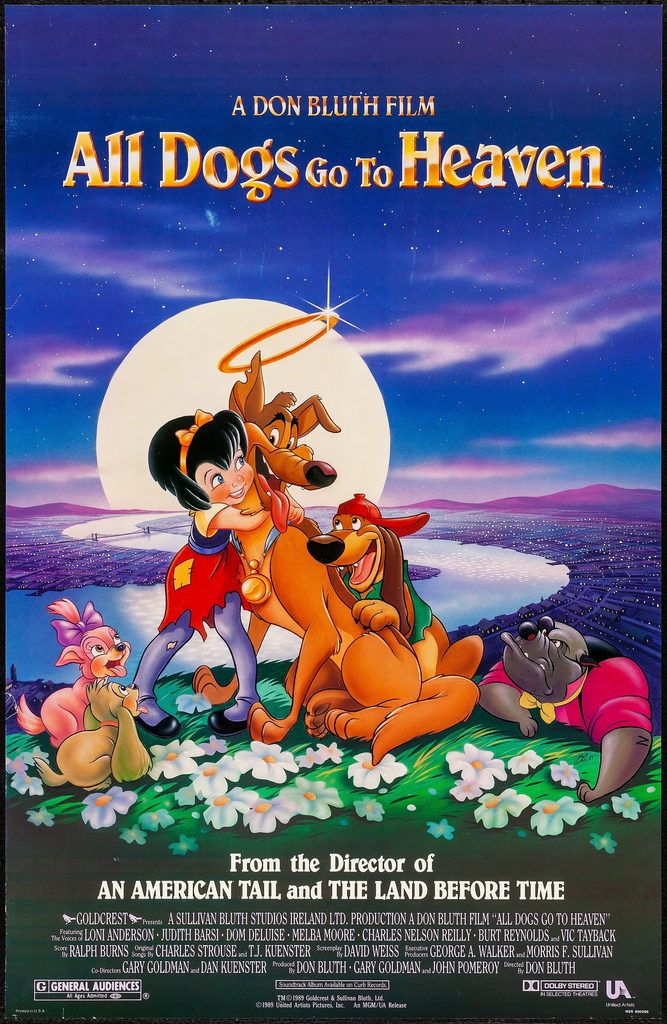
MEMORY LANE # 16 : JOHN POMEROY – 1988 – ALL DOGS GO TO HEAVEN – Clean Up Notes – Part 1

MEMORY LANE # 16 : JOHN POMEROY – 1988 – ALL DOGS GO TO HEAVEN – Clean Up Notes – Part 1

September 28, 2026 Mark Pudleiner

Go back in time and join the Clean‑Up Crew working on Don Bluth’s fourth animated feature film as they meet with Supervising Animator / Producer John Pomeroy in his room, where he goes over notes for his character Anne‑Marie.

When Clean‑Up Supervisor Vera Pacheco left Bluth Studios in Ireland to join Disney’s Who Framed Roger Rabbit production in England, she recommended me to take over her role on the next Bluth feature, All Dogs Go to Heaven. Stepping into the supervisor position was both a huge opportunity and a crash course in balancing quality control, weekly footage quotas, and the pressure of production meetings — including the moments when Don would point at me and ask where the numbers were.

John asked me to assemble and direct a small Clean‑Up crew dedicated to his main character on the move — the young female lead, Anne‑Marie. She was a delicate character to handle: full of physical movement, subtle acting, and that signature Bluth appeal. The clean‑up required solid draftsmanship, sensitivity to the animators’ roughs, and a careful touch to preserve every bit of charm in the drawings. Our Anne‑Marie team consisted of Ashley McGovern, Helen Lawlor, Eileen Conway, and Wendo Van Essen.

In this video, I captured a quick moment in my office before we headed upstairs to meet John. You’ll see Ashley at my desk, still finishing a drawing as she quietly tells me to “go away” with the camera — sorry Ash, but I think you’re probably glad I filmed it now.

We then cut to John’s room on the 5th floor of the Irish studio, where he reviews one of Wendo’s clean‑up drawings. John walks the team through his notes, explaining the best way to approach Anne‑Marie’s line work. He demonstrates the delicate use of the kneaded eraser — just enough to gently soften the animator’s rough without losing information — and then focuses on the design of the eyes, adding subtle structure lines and the right thickness to the eyelashes to maintain appeal.

It’s a rare behind‑the‑scenes moment from the 1988 production: a Supervising Animator speaking directly with the clean‑up crew about how to bring a character to life.
Hope you enjoy this Part 1 video.

JOHN POMEROY – ALL DOGS GO TO HEAVEN – CLEAN UP NOTES – PART 1


Show Notes :

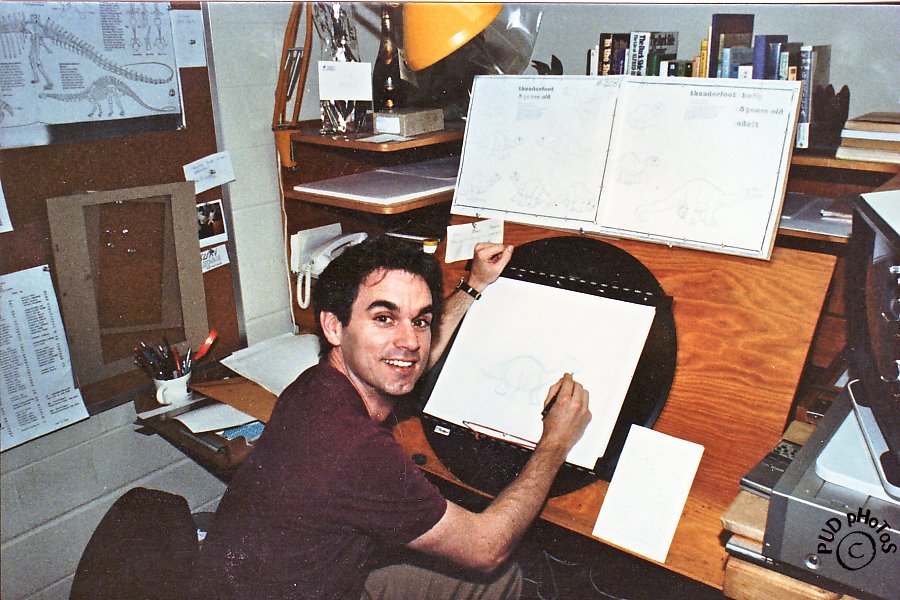
Supervising Animator / Producer John Pomeroy at his desk Early 1986

Here’s one of my photos of John at Sullivan Bluth Studios in Van Nuys, California, taken during the 1985–86 production of Don Bluth’s second animated feature, An American Tail.
Every so often during a break, I’d walk around the studio with my camera, grabbing photos or video of the artists just to document what everyday life looked like during production — the behind‑the‑scenes moments that usually disappear as everyone is so busy.
On this particular day, I knocked on John’s door and found him working on one of the main characters for the next feature about to go into production, The Land Before Time. It looks like he was developing a model‑sheet turn‑around for the character then known as Thunderfoot — who audiences would later come to know as Littlefoot.


John Pomeroy Links :

Pomeroy Art Academy > LINK

Pomeroy Art Academy YouTube channel > LINK

Pomeroy Art Academy Instagram Link > LINK

John Pomeroy Art  – Instagram > LINK

John Pomeroy Online Store > LINK

John Pomeroy IMDB > LINK

John Pomeroy LinkedIn > LINK


All Dogs go to Heaven ‘ Anne Marie ‘ Key Clean Up Crew :

Ashley McGovern – Character Key Clean-up Artist : IMDB > LINK

Wendo Van Essen – Character Key Clean-up Artist : IMDB > LINK

Helen Lawlor – Character Key Clean-up Artist : IMDB > LINK

Eileen Conway – Character Key Clean-up Artist : IMDB > LINK

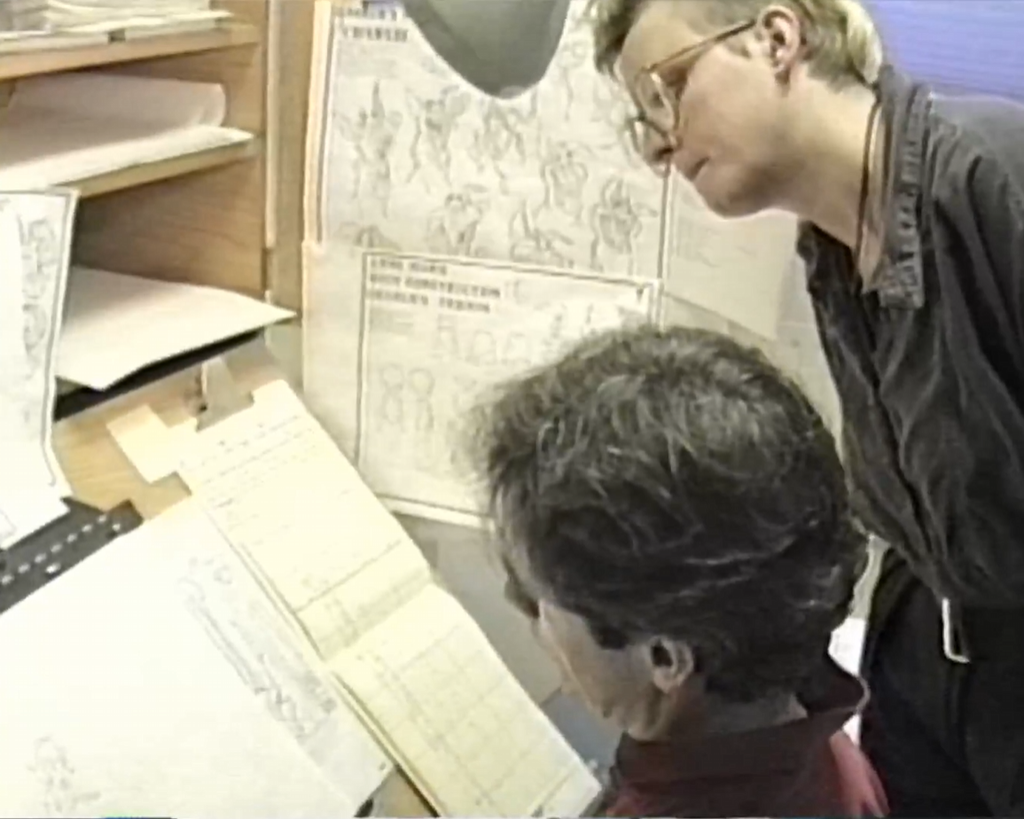
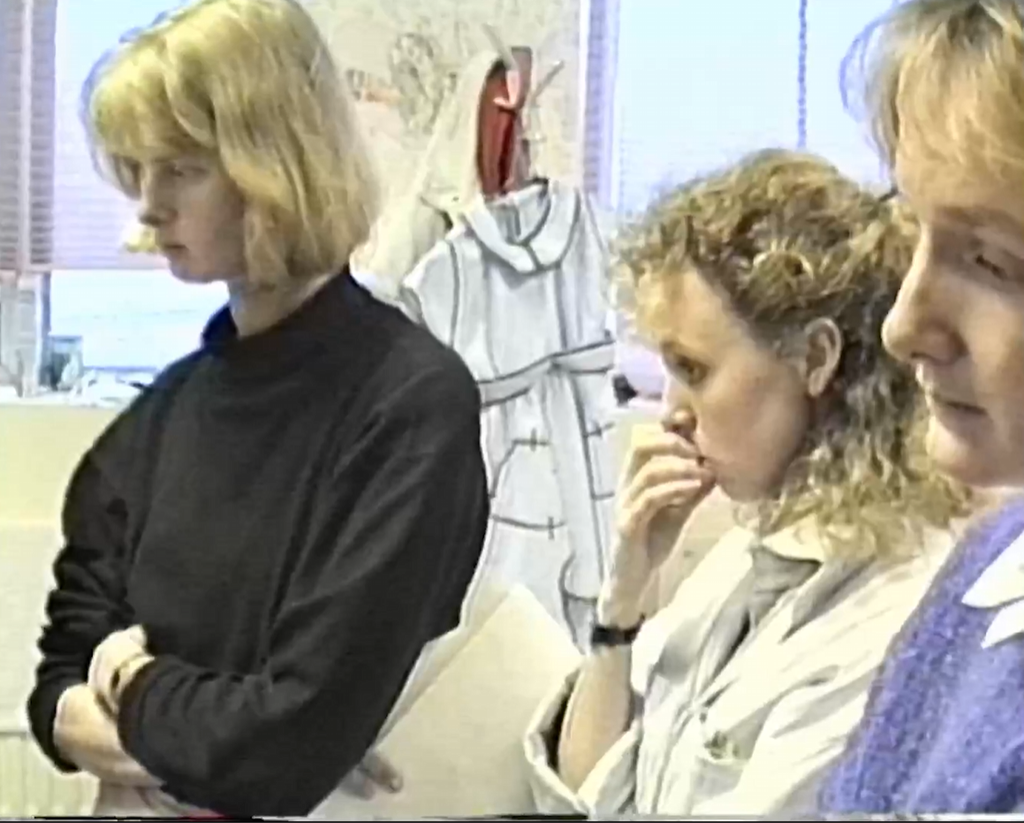
Character Key Clean-up Artist Wendo Van Essen talks over one of her drawings with Supervising Animator / Producer John Pomeroy
as the other ‘ Anne Marie ‘ Key Clean-up Artists
Eileen Conway, Ashley McGovern and Helen Lawlor look on.


‘ Cleaning up Animators drawings ‘
Note from Producer Gary Goldman

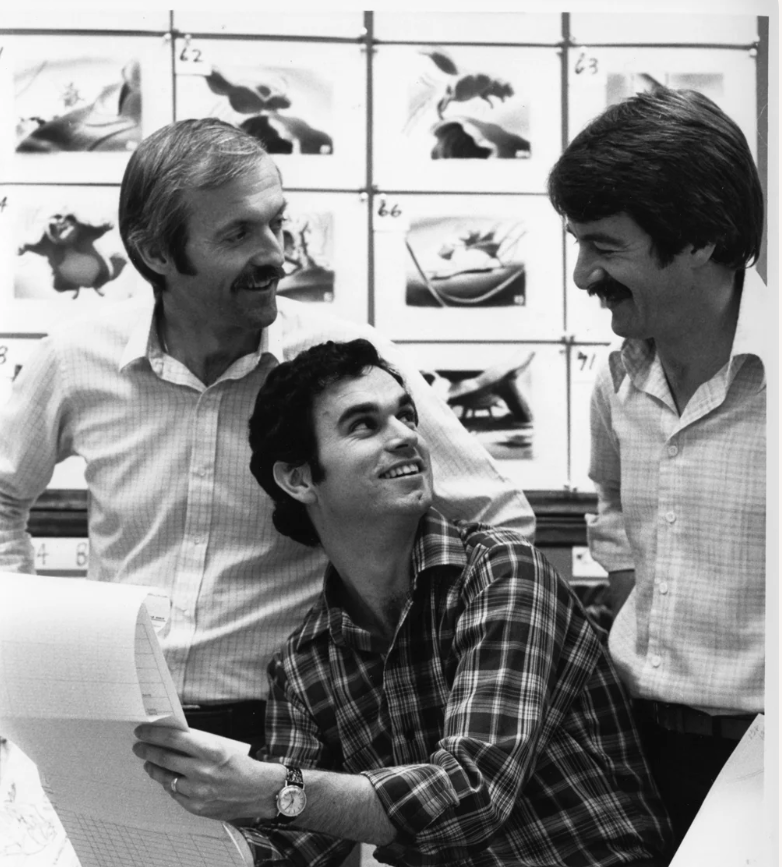
Don Bluth / John Pomeroy / Gary Goldman – early 1980s

I asked Gary Goldman [ who is the Producer and co-director of Don Buth Animation … as well as Mathieu’s Great Uncle 🙂 ] about the reason for ‘ cleaning up ‘ onto the original animators drawings while working at Don Bluth Studios. Below is his response and he mentioned that it was fine to post :

Cleaning up the animator’s ruff animation on separate paper wasn’t budget related. It’s the way we were trained at Disney during the ’70s under Woolie, Milt, Frank, Ollie, John Lounsbery and Eric Larson. They drummed it into our heads to knead down the animator’s ruff drawings and cleanup them up on the same page. We had always cleaned up the original animator’s drawings, otherwise the result is sort of a weak, fine-line tracing of the original. I believe that the reason Disney started cleaning up on a new paper was to preserve the original ruff, in case cleanup artists might have changed something that the animator or the director did not like and wanted to review the originals to make the correction. Our philosophy has always been that a cleanup on a separate piece of paper was a mere tracing of the original and lacked the power or essence of the animator’s work. 

I was once the victim of poor cleanup on an 18 foot, multi-level scene with Bernard, Bianca, Evenrude and the leaf boat during production on The Rescuers, where the final version was stiff, and off model. It was heartbreaking for me, but I still believe that the originals should be cleaned up unless, of course, the originals are so far off model, or too ruff, or so darkened with a 6B pencil making is almost impossible to clean up the those drawings. 

If you ever had a chance to check scenes out of the Disney morgue ( archive ), from Snow White, Pinocchio, Bambi, or any of the classics and even up thru Pete’s Dragon and The Fox and the Hound, the originals were always cleaned up on the same paper. Except maybe for Glen ( Keane ), who drew in a very heavy, sketchy style that the cleanup artist may have been too intimidated to take a chance on choosing which line Glen intended for the action. Glen always came up with some very powerful images, and the ruffs are probably still there in the morgue to prove it.” – Gary Goldman


A Post from my old BLOG regarding Clean Up Notes From John :

Late 1987 – Dublin Ireland

My Clean Up Supervisor Vera Pacheco was leaving Don Bluth Studios in Ireland to join the Disney production of ‘ Who Framed Roger Rabbit ‘ in England. She mentored and promoted me to fill in her position as Clean-Up Supervisor for the next Don Bluth feature ‘All Dogs Go To Heaven‘. 

It was a great opportunity working at the level of supervisor, being responsible for keeping the  Quality of the Clean Up art work as well as producing the needed footage for each weeks quota. It was also very much a learning experience being apart of the weekly production meetings learning how the business side of things worked dealing with the pressures etc.
I still remember a few times where Don would point at me and ask where the numbers were.
I always had to explain any reasons if and why the department was behind, any issues with certain scenes etc. I learned from Vera that sometimes adding a few extra artists on one scene for the end of the week push could help fill in some gaps every now and then. 
Art and business. Always lots of pressure but very fulfilling when you get the needed numbers for the week and the director comments on how good a job your department is doing with the Quality of work.

Being new at the position I thought I might create some notes that could help the Clean-Up Artists as they got to learn this new film with the new characters.
So I asked the studios Leading Supervising Animator JOHN POMEROY if it was ok that i borrow a few moments of his time for him to go over some drawings every now and then.  
John led the animators with his beautiful sense of appeal and design in his drawings. If you know this BLOG you’ll know I frequently post his work.

John really liked the Idea so once we were able to meet with our schedules I went up to his room and watched over his shoulder as he would draw over a Key clean up drawing from one of my Key Artists. He would be explaining to me the reason for each change. I scribbled down his thoughts as he continued looking over the drawing.
Once back in my room I would put together a hand out note that i would then give to each artist in my department. 

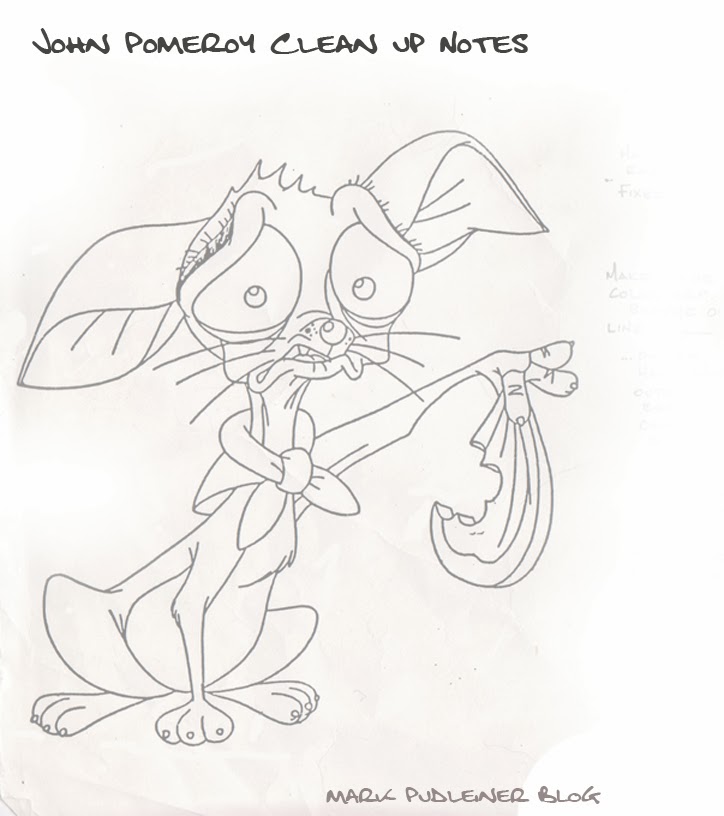
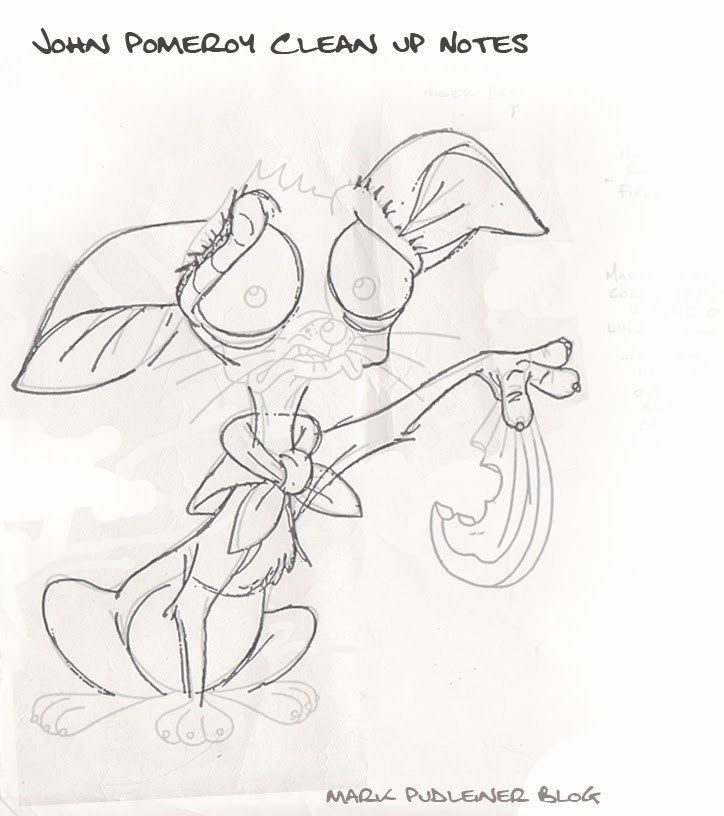
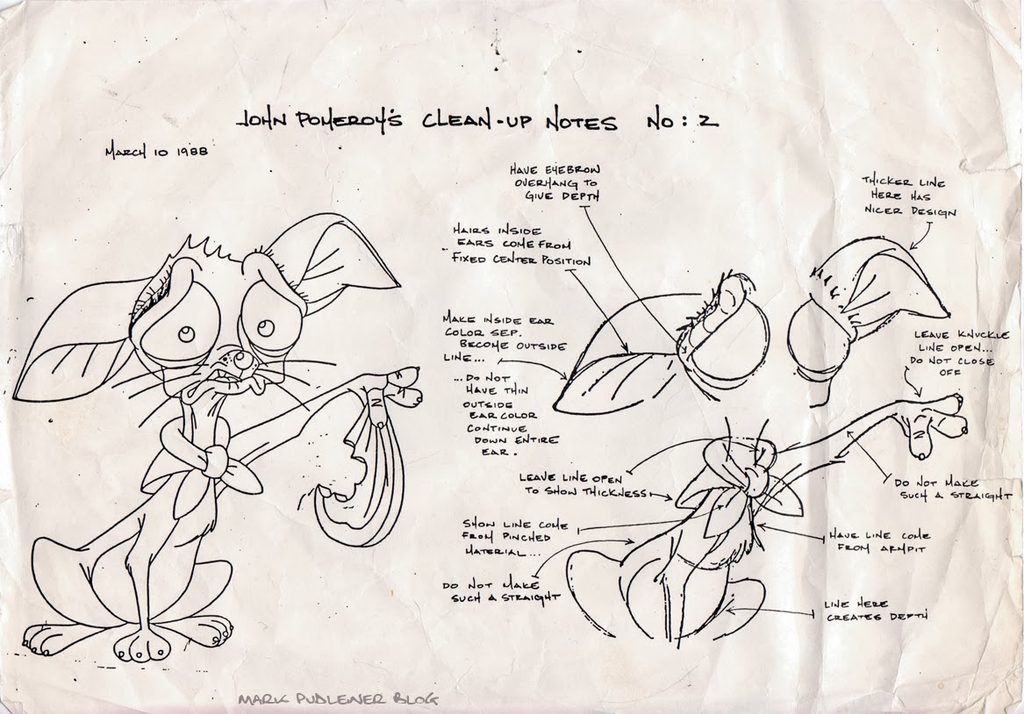
Below are the BEFORE drawing and the Pass showing John’s drawn changes.
At the very bottom is the actual hand out showing the side by side differences as well as the notes that i wrote down explaining what John had told me while he was going over the drawing.

The Original Artist Key Clean-up Drawing :


John’s drawover sketch showing how he would make changes to the Clean Up :


The side by side showing the original with the changes.
I added all the notes John discussed while going over the drawing.


All Dogs go to Heaven : Entire Crew Credits > LINK


COMPARING THE THEMES
OF THE BOOK VS. THE FILM

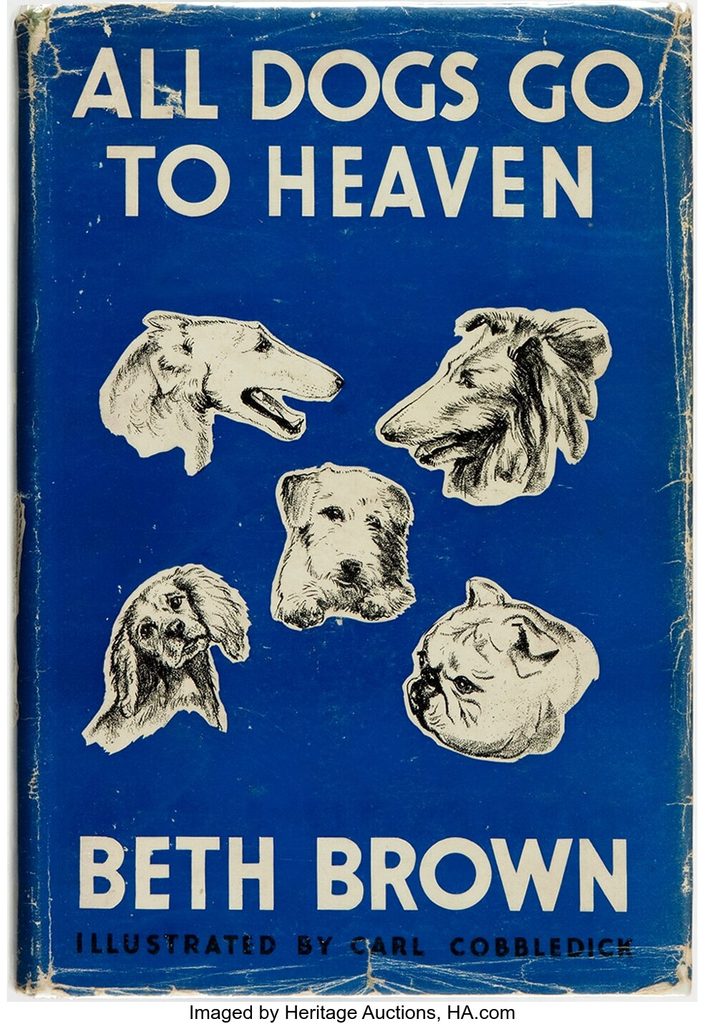
Question : Was Don bluths animated feature ‘ All Dogs go to Heaven ‘ based on the book by Beth Brown. All Dogs Go to Heaven. New York: Arco Co., 1943. First edition ?

Beth Brown. All Dogs Go to Heaven. New York: Arco Co., 1943. First edition.

Short answer: No — All Dogs Go to Heaven (1989) was not based on Beth Brown’s 1943 book All Dogs Go to Heaven. The Don Bluth film is an original story created inside the Bluth/Sullivan Bluth studio, with no documented connection to Brown’s book beyond the coincidental shared title.

Reference helped gathered using Microsoft co-pilot

Core takeaway: Beth Brown’s All Dogs Go to Heaven (1943) and Don Bluth’s All Dogs Go to Heaven (1989) share a title and a broad spiritual premise, but their themes, tone, and narrative purpose are fundamentally different. Brown’s book is a mystical, philosophical collection of dog stories; Bluth’s film is a redemption‑arc gangster fantasy with emotional stakes, moral growth, and darker psychological undercurrents.

What the Bluth film was actually based on

The 1989 animated feature was developed from an original story by:

  • Don Bluth
  • Gary Goldman
  • Dan Kuenster
  • Larry Leker
  • Linda Miller
  • Monica Parker
  • John Pomeroy
  • Guy Shulman
  • David Steinberg
  • David N. Weiss

The film’s story foundation is a mix of:

  • 1930s gangster‑film tropes
  • A redemption arc inspired by A Christmas Carol
  • A reincarnation/heaven motif that Bluth had explored in earlier concepts
  • A dog‑centric twist on noir themes (gambling, betrayal, revenge)

There is no mention in any production notes, interviews, or copyright filings of Beth Brown’s book being used, referenced, optioned, or adapted.

What Beth Brown’s 1943 All Dogs Go to Heaven actually is

Beth Brown’s book (Arco Publishing, 1943) is a short, sentimental prose work about the idea that dogs possess souls and therefore go to heaven. It’s essentially a reflective, philosophical piece — not a narrative, not a children’s adventure, and not a plot-driven story with characters, villains, or conflict.

Key traits of the book:

  • No characters resembling Charlie, Carface, Itchy, Anne‑Marie, etc.
  • No gambling, crime, redemption arc, or “return from heaven” storyline.
  • No plot structure that could be adapted into the Bluth film.
  • It’s a thematic meditation, not a story suitable for direct adaptation.

The only overlap is the title and the general idea that dogs can go to heaven.

Beth Brown’s All Dogs Go to Heaven (1943) and Don Bluth’s All Dogs Go to Heaven (1989) share a title and a broad spiritual premise, but their themes, tone, and narrative purpose are fundamentally different. Brown’s book is a mystical, philosophical collection of dog stories; Bluth’s film is a redemption‑arc gangster fantasy with emotional stakes, moral growth, and darker psychological undercurrents.

1. Core Theme: What “Heaven” Means

Beth Brown (1943)

  • Heaven is a universal, comforting afterlife where all dogs continue to exist joyfully.
  • The book emphasizes continuity of spirit: dogs never truly die; they remain with us in another form.
  • It’s a philosophical reassurance for dog lovers.

Don Bluth (1989)

  • Heaven is a moral destination but not guaranteed; Charlie earns redemption through change.
  • The afterlife is part of a character arc, not a universal promise.
  • The film uses heaven to explore guilt, consequence, and transformation.

Contrast: Brown treats heaven as an absolute truth for all dogs; Bluth treats it as a moral framework for storytelling.
2. Tone & Emotional Purpose

Beth Brown

  • Tone is mystical, tender, wistful, patriotic, and uplifting.
  • Stories are meant to comfort, inspire, and offer gentle spiritual philosophy.
  • Even when dogs “die,” the tone remains reassuring, never dark.

Bluth

  • Tone is dark, emotional, and sometimes frightening.
  • Includes betrayal, murder, revenge, nightmares, and moral reckoning.
  • The emotional purpose is catharsis: confronting loss, guilt, and letting go.

Contrast: Brown’s book comforts; Bluth’s film challenges.

3. Themes of Morality & Growth

Beth Brown

  • Dogs are inherently good; their afterlife is unconditional.
  • Moral lessons are gentle: miracles, kindness, dreams, companionship.
  • No character undergoes a dramatic moral transformation.

Bluth

  • Charlie begins as a self‑serving hustler; his arc is about learning love and selflessness.
  • Redemption is earned through sacrifice, especially his bond with Anne‑Marie.
  • The film stresses that second chances matter, but sometimes come too late.

Contrast: Brown’s dogs are spiritually complete; Bluth’s protagonist must become good.

4. Themes of Loss & Letting Go

Beth Brown

  • Loss is softened: dogs never truly leave; they remain spiritually present.
  • The book’s message: your dog is still with you.

Bluth

  • Loss is painful and central: Charlie must say goodbye to Anne‑Marie.
  • The film acknowledges grief, separation, and the finality of death.

Contrast: Brown denies the finality of loss; Bluth confronts it.


Views: 204
Meeting with Mathieu 15 – Caleb Natale : Visual Effects Artist

Meeting with Mathieu 15 – Caleb Natale : Visual Effects Artist

September 13, 2026 Mark Pudleiner

Mathieu is back with his dad for Episode 15, this time introducing him to the wild, energetic world of filmmaker and VFX artist Caleb Natale. They dive into three of Caleb’s YouTube shorts, where live‑action moments collide with the snappy, cartoon timing of old‑school Warner Bros. and Tex Avery classics.

Caleb Natale : Visual Effects Artist

Show Notes :

YouTube Short 1 : ‘ Tried to Hit him with the Tom and Jerry … ‘ > LINK

YouTube Short 2 : ‘ Saturday Morning CAR-toons ‘ > LINK

YouTube Short 3 : ‘ When it’s the perfect weather for a Cartoon-Cookout ‘ > LINK


Natale Production Studio : LINK

From the Studio :

Natale Productions is a Video production house founded by Caleb Natale in 2021. Our team specializes in bringing your ideas to life and creating outside the box videos. We have created short-form VFX content for some of the world’s largest and most loved brans – making the internet a more magical place one render at a time.

Caleb Natale YouTube Channel > LINK


Caleb Natale LINKS :

Business inquiries – Email : caleb@night.co

Instagram > LINK

TikTok > LINK

LinkedIn > LINK

X > LINK

Views: 260
SPECIAL MESSAGE # 1 : FROLLO in Vancouver !

SPECIAL MESSAGE # 1 : FROLLO in Vancouver !

September 7, 2026 Mark Pudleiner

Kathy Zielinski, the legendary supervising animator behind Disney’s villain Frollo, drops in to visit Mark at work and record a special message for her upcoming SPARK ANIMATION 2026 masterclass.
Her session, “Designing and Animating Villains You Love to Hate!”, takes place Friday, Sept. 18th at 9:30 AM in Vancouver, BC and offers a rare look into dark, graphic, personality‑driven character animation.

FROLLO in Vancouver ! Special Message

Show Notes :

Kathy Zielinski LINKS :

IMDB > LINK
LinkedIn > LINK

Nadine Westerbarkey LINKS :

IMDB > LINK
LinkedIn > LINK


Friday – September 18, 9:30 AM
MASTERCLASS DESIGNING AND ANIMATING VILLAINS YOU LOVE TO HATE!
with Kathy Zielinski ·

Moderated by Nadine Westerbarkey

Regular: $125

MASTERCLASS OVERVIEW
Bring your evil side with you to this all-day Masterclass where you will spend time with Disney Supervising Villain Animator Kathy Zielinski. Guided by her years of bringing to life spinach monsters (Student Academy Award-winning GUESS WHO’S FOR DINNER), octopus sea-witch Ursula (THE LITTLE MERMAID), all-powerful genie (ALADDIN), and lecherous Judge Claude Frollo (THE HUNCHBACK OF NOTRE DAME). Learn how to jump into the soul of an animated villain and craft your own sinister character design.

Date: Friday, 18 September 2026
Times: 9:30 am – 5 pm (followed by a signing)
Venue: Performance Theatre · Roundhouse
181 Roundhouse Mews · Vancouver · BC

Session 1
An Overview of Kathy’s Lengthy Career in the Animation Industry
Kathy will show her work from renowned companies such as Disney Feature Animation, DreamWorks, Fox Animation, and more.

  • Skills and techniques used to design and animate characters.
  • Q&A.

Session 2
The Process Behind Designing an Animated Villain Character
Kathy will be sharing her insights and methods for Character design.

  • Finding inspiration.
  • Research and the tools needed to mold a villain that is unique.
  • Design process on various animated productions creating Frollo, Jafar (as the beggar, snake, genie), Tzkel-Khan, and Hexus.

Session 3
Animating a Villainous Character
Kathy will be sharing her process and stories from working on various Animation features from Disney, DreamWorks, and other studios.

  • The research and prep needed to prepare you for your role to perform your villain animation.
  • Breaking down successful and not-so-successful animated villains.
  • Discussion of my personal experience working on films such as The Hunchback of Notre Dame, Aladdin, The Little Mermaid, and more.

Session 4
How to Design Your Own Villainous Character.
Kathy will guide in this workshop with tips and methods she uses for character design.

  • A demonstration from Kathy designing a character.
  • Workshop with guidelines to create your own villainous character.
  • Materials needed: laptop/device for research and tools for drawing/writing.

VENUE: Roundhouse · Performance Theatre
181 Roundhouse Mews · Vancouver · BC · V6Z 2W3


SPARK CG SOCIETY Website > LINK


MARKS WORK > LINK

Views: 236
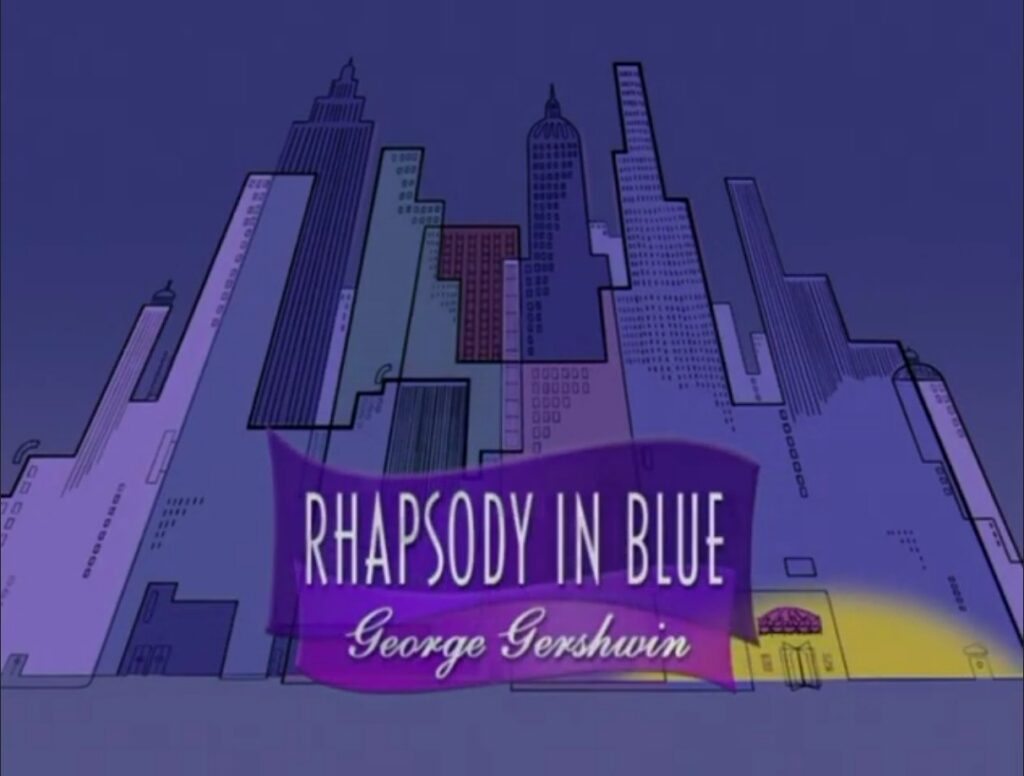
MEMORY LANE # 15 : RHAPSODY in BLUE – behind the Scenes at the Disney Feature Animation building

MEMORY LANE # 15 : RHAPSODY in BLUE – behind the Scenes at the Disney Feature Animation building

August 22, 2026 Mark Pudleiner

May 17, 1999 — Disney Feature Animation marks the completion of all Animation and Layout for the Fantasia 2000 sequence “Rhapsody in Blue.” In this episode, Mark steps out from his second‑floor room and walks the studio hallways toward the celebration already underway.
— a small, vivid snapshot of studio life during the height of the Disney Renaissance.

Walking the hallways and joining the celebration

Show Notes


My 2 scenes I animated on Rhapsody in Blue – These scenes were cast to me by Director Eric Goldberg


Below is a List of some of the Rhapsody in Blue Production Crew members :

Eric Goldberg — Director, Story, Animator
IMDB > LINK
LinkedIn > LINK

Susan McKinsey Goldberg — Art Director
IMDB > LINK

Tim Allen – Animator
IMDB > LINK

James Baker – Animator
IMDB > LINK
LinkedIn > LINK

Jared Beckstrand – Animator
IMDB > LINK
LinkedIn > LINK

Nancy Beiman – Animator
IMDB > LINK
LinkedIn > LINK

Jerry Yu Ching – Animator
IMDB > LINK
LinkedIn > LINK

Andreas Deja – Animator
IMDB > LINK
WEBSITE > LINK

Robert Espanto Domingo – Animator
IMDB > LINK

Brian Ferguson – Animator
IMDB > LINK
LinkedIn > LINK

Doug Frankel – Animator
IMDB > LINK
LinkedIn > LINK

Tom Gately – Animator
IMDB > LINK

David Hancock – Animator
IMDB > LINK
LinkedIn > LINK

Jin Kim – Animator
IMDB > LINK
LinkedIn > LINK

Bert Klein – Animator
IMDB > LINK
LinkedIn > LINK

Joe Oh – Animator
IMDB > LINK
LinkedIn > LINK

Jamie Oliff – Animator
IMDB > LINK
LinkedIn > LINK

Mark Pudleiner – Animator
IMDB > LINK
LinkedIn > LINK

Michael Show – Animator
IMDB > LINK
LinkedIn > LINK

Marc Smith – Animator
IMDB > LINK

Chad Stewart – Animator
IMDB > LINK

Michael Stocker – Animator
IMDB > LINK
LinkedIn > LINK

Andreas Wessel‑Therhorn – Animator
IMDB > LINK
LinkedIn > LINK

Theresa Wiseman – Animator
IMDB > LINK
LinkedIn > LINK

Anthony Ho Wong – Animator
IMDB > LINK

Ellen Woodbury – Animator
IMDB > LINK
LinkedIn > LINK

Phil Young – Animator
IMDB > LINK
LinkedIn > LINK


Patricia Hicks — Co‑Producer (segment‑specific)
IMDB > LINK

Loni Beckner‑Black — Production Manager
IMDB > LINK
LinkedIn > LINK

Dan Hansen — Artistic Coordinato
IMDB > LINK
LinkedIn > LINK

Please send me any names missing from production and I can add to this list – thank you !


Views: 349
Animation Breakdown # 4 – ‘ Got a Match ? ‘ – 1970s Canadian Government Anti-Smoking Public Service Announcement

Animation Breakdown # 4 – ‘ Got a Match ? ‘ – 1970s Canadian Government Anti-Smoking Public Service Announcement

August 16, 2026 Mark Pudleiner

During the 1970s, the Canadian government ran an anti‑smoking Public Service Announcement campaign warning children about the dangers of cigarettes.

In this episode, we follow Mark as he breaks down two moments in detail from the PSA “Got a Match?” Stepping through the animation frame by frame, he explores the choices the animator made to communicate the performance while staying true to the unique style the National Film Board of Canada (NFB) was known for.

The PSA aired on Canadian television throughout the early 1970s, typically during children’s programming blocks — including The Flintstones at noon on many stations.

“Got a Match?” — 1970s Canadian Anti‑Smoking PSA

SHOW NOTES :


“ Got a Match? ”
1970s Canadian Anti‑Smoking PSA > LINK


YouTube links showing other 1970s Canadian anti‑smoking PSAs from the National Film Board of Canada (NFB) :


“ What a Slave ”
1970s Canadian Anti‑Smoking PSA (NFB) > LINK


“ The Diner ”
1970s Canadian Anti‑Smoking PSA (NFB) > LINK


“ Light Me Harry ”
1970s Canadian Anti‑Smoking PSA (NFB) > LINK


“ Firing Squad ”
1970s Canadian Anti‑Smoking PSA (NFB) > LINK


“ Volcano ”
1970s Canadian Anti‑Smoking PSA (NFB) > LINK


Views: 401
MARCH 5 – The Creature – Part 2 – Milicent Patrick and ANIMATION

MARCH 5 – The Creature – Part 2 – Milicent Patrick and ANIMATION

August 3, 2026 Mark Pudleiner

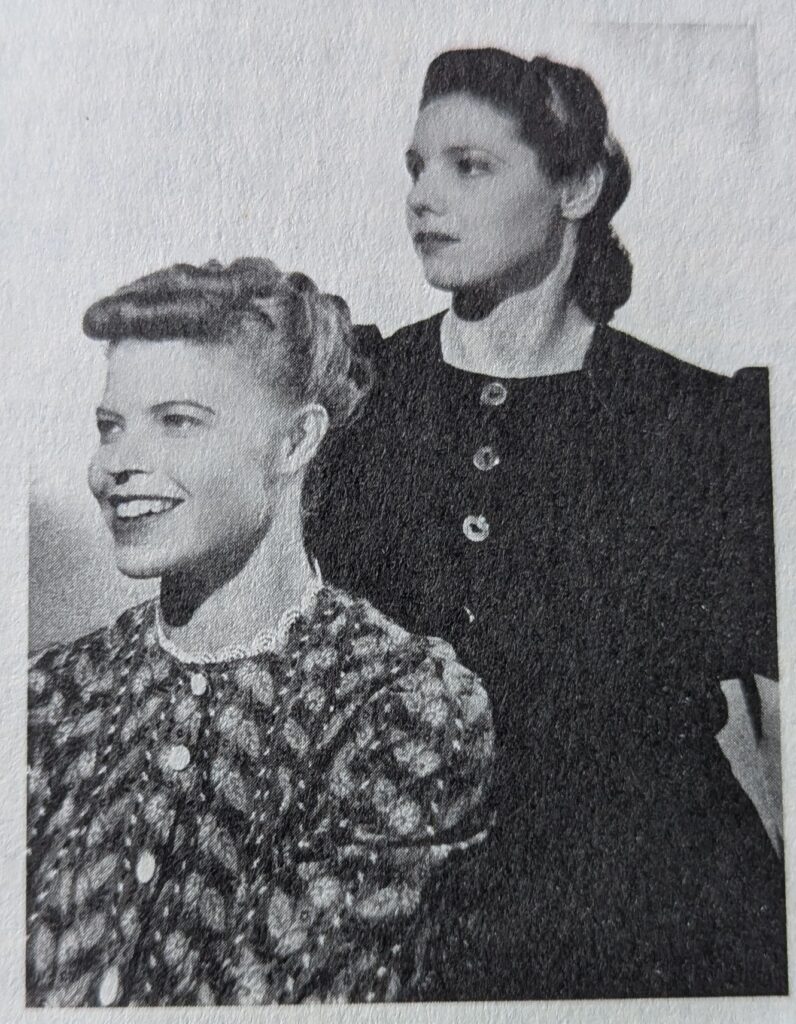
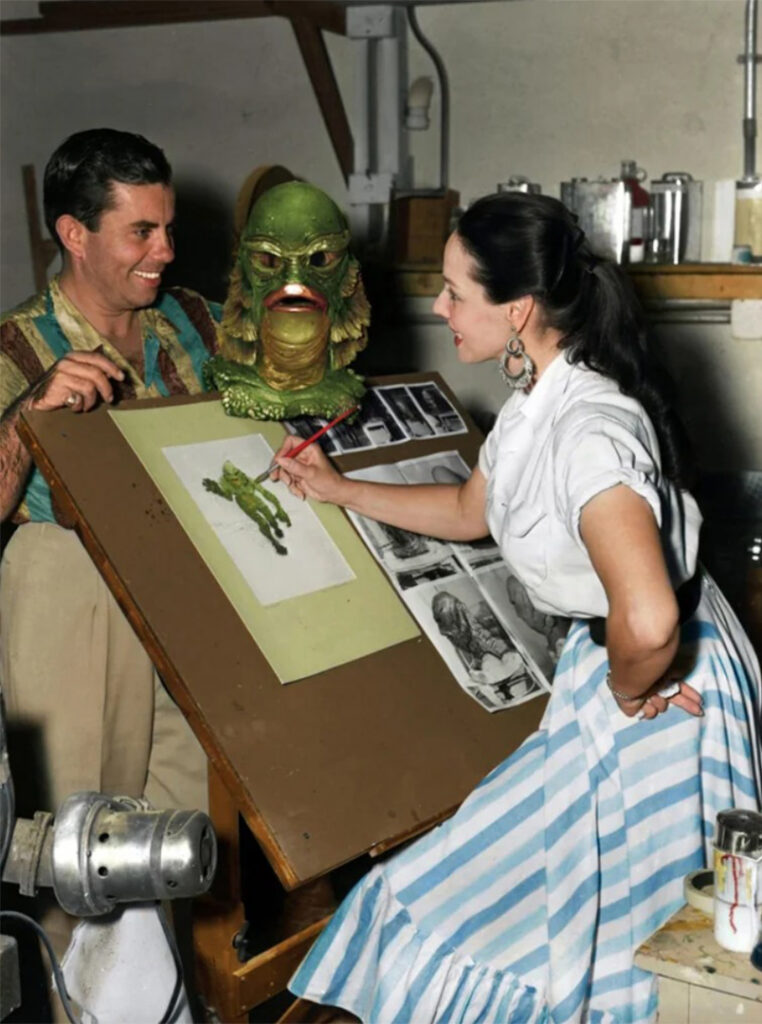
On March 5, 1954, Universal Studios released their classic monster feature The Creature from the Black Lagoon. In Part Two, Mark dives into the evolution of the Creature’s design — from the earliest concept to the remarkable journey of young artist Milicent Patrick, whose path led her to Universal Studios and ultimately to shaping the iconic Gill‑man. The episode then traces how the Creature’s influence carried forward into animated films and television, mapping the monster’s surprising legacy across decades of screen history.

MARCH 5 – The Creature – Part 2 – Milicent Patrick and ANIMATION

SHOW NOTES :

Milicent Patrick
IMDB > LINK


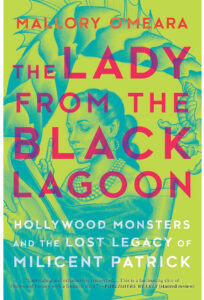
The lady from the Black Lagoon : Hollywood Monsters and the Lost Legacy of Milicent Patrick

Mallory O'Meara book : 
"The Lady from the Black Lagoon: Hollywood Monsters and the Lost Legacy of Milicent Patrick "
Mallory O’Meara book :
“The Lady from the Black Lagoon: Hollywood Monsters and the Lost Legacy of Milicent Patrick ” > LINK

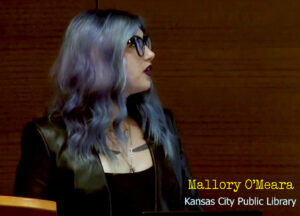
O’Meara discusses the book, her first, which is part fascinating and infuriating biography, part autobiography, part detective story, and part censure of sexism in the male-dominated movie industry.
The Lady From the Black Lagoon – Mallory O’Meara
The Kansas City Public Library : > LINK
O’Meara discusses the book, her first, which is part fascinating and infuriating biography, part autobiography, part detective story, and part censure of sexism in the male-dominated movie industry.

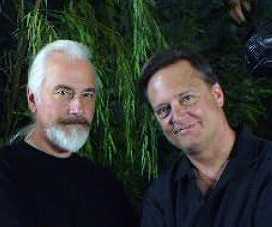
Artist / Actor Frank Dietz

Rick Baker with Frank Dietz

Frank Dietz Links
IMDB > LINK
Linkedin > LINK
YouTube Channel – ‘ THIS MONSTROUS LIFE ‘ > LINK


Hearst Castle in California

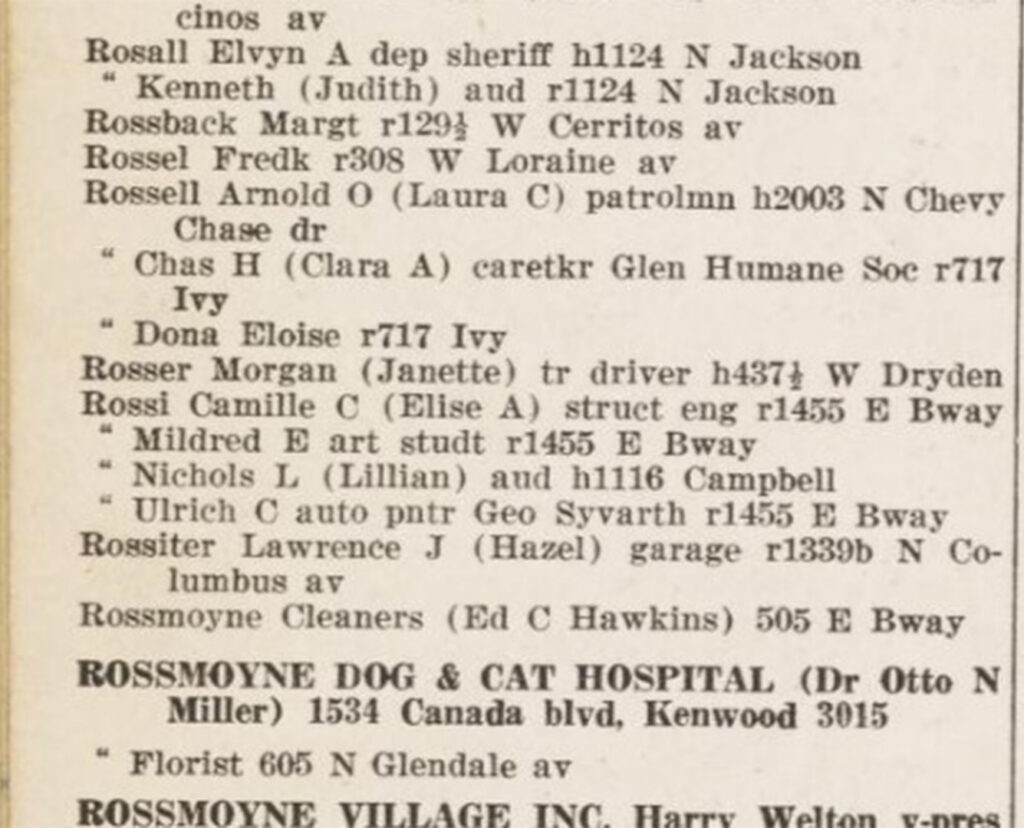
Hearst Castle, where Milicent Patrick spent her childhood while her father, Camille Rossi, served on the construction staff.

Hearst Castle Website > LINK


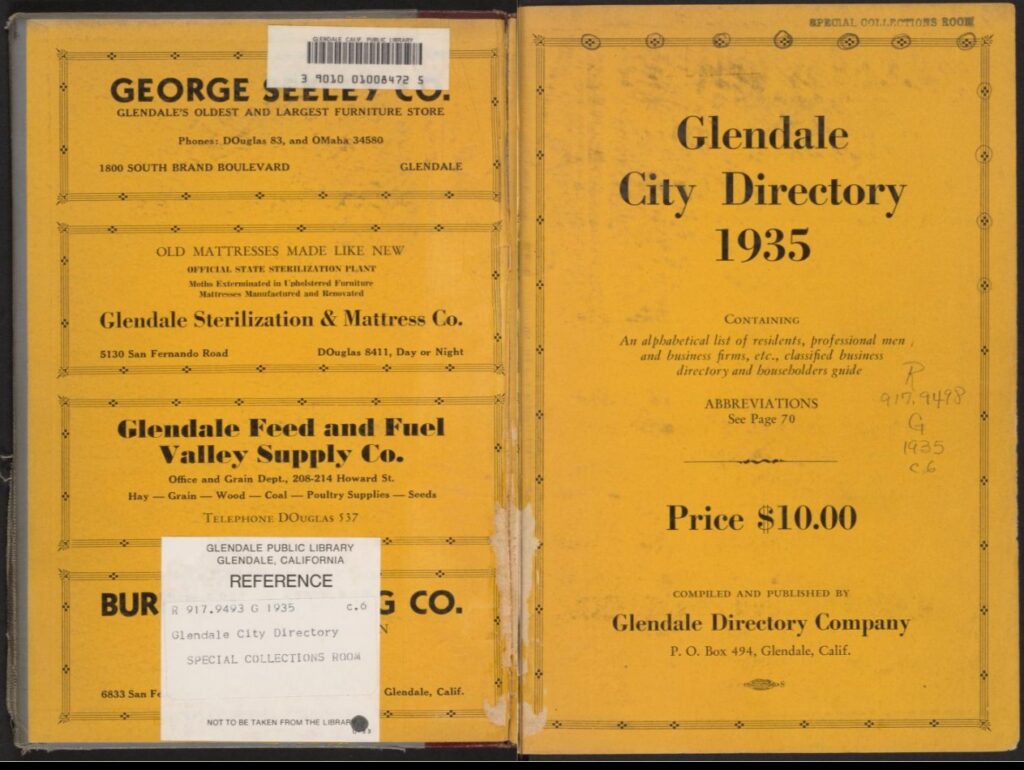
Glendale City Directory 1935


Glendale California Community College

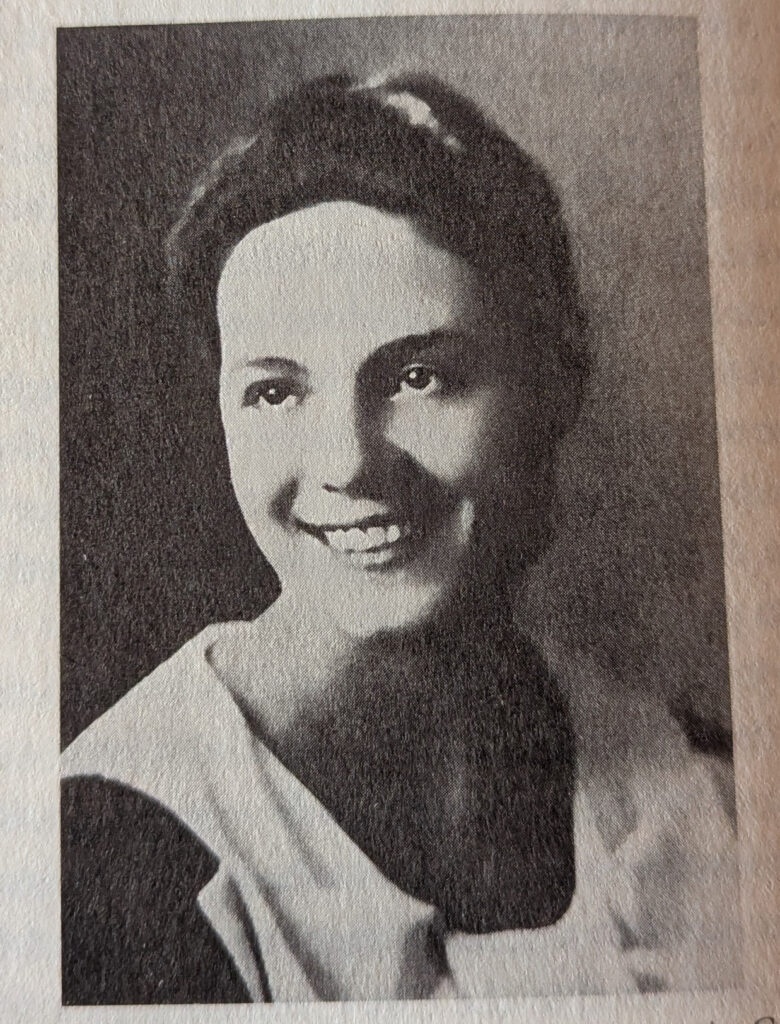
Milicent Patrick 17 years old
Glendale Community College Archives

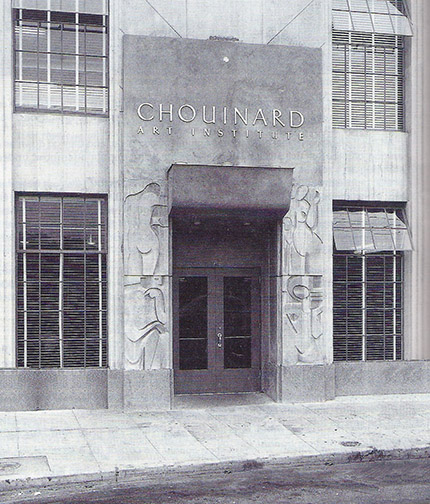
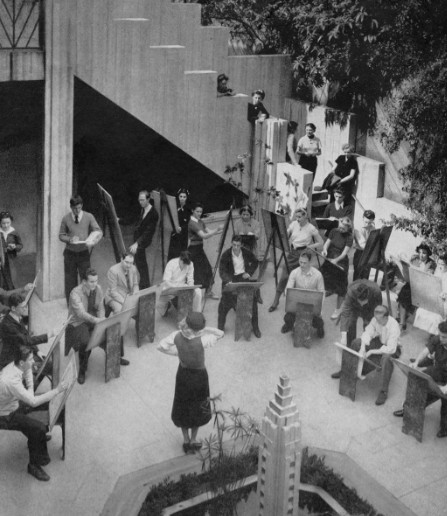
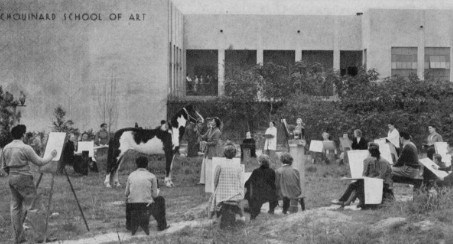
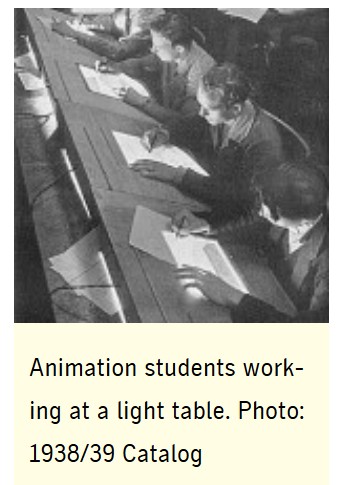
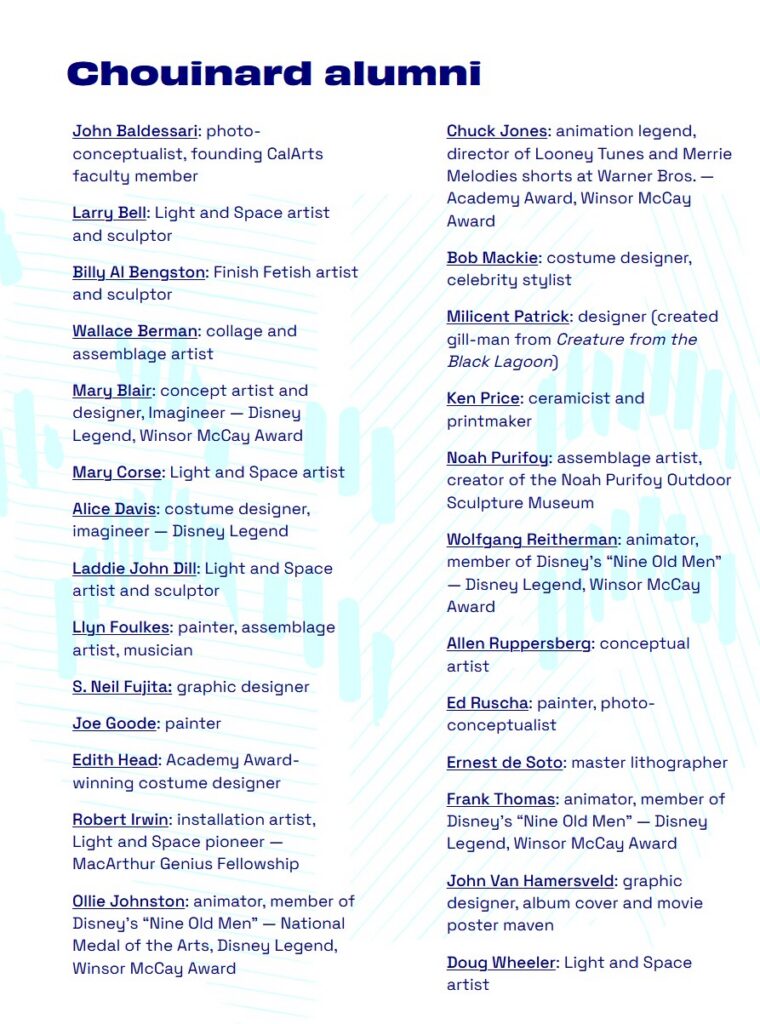
Chouinard Art Institute

1930’s Poster
Double Door Entrance
Chouinard Art Students – 1930’s

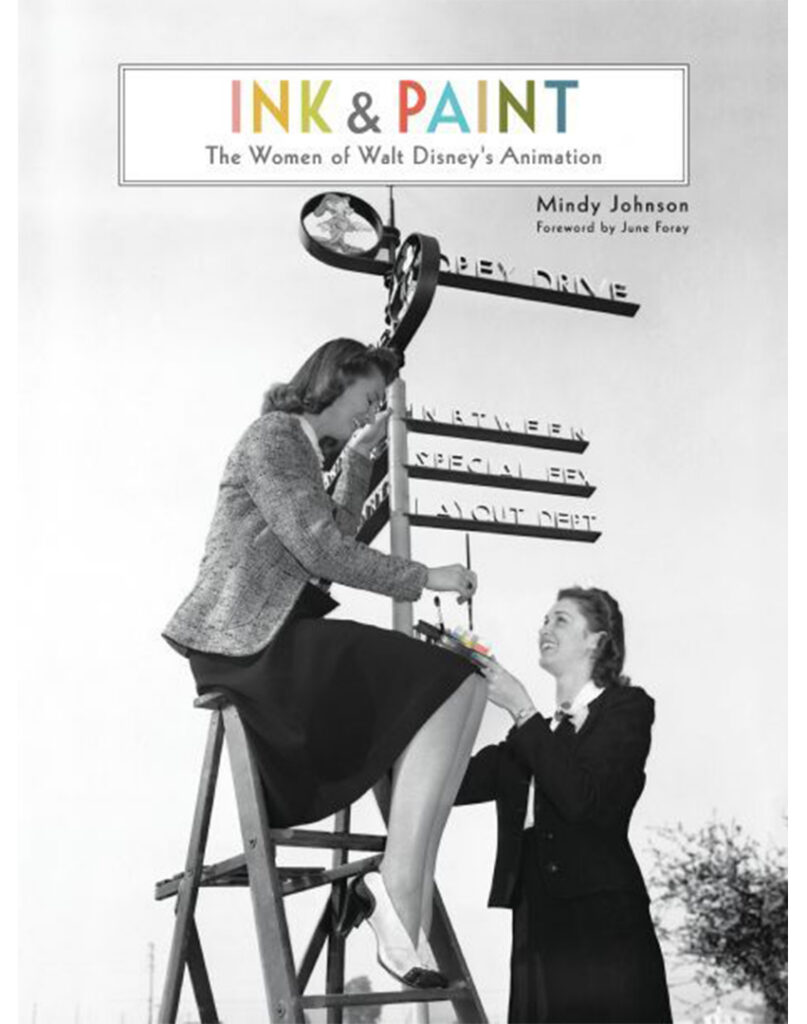
Mindy Johnson’s : INK & PAINT The Women of Walt Disney’s Animation

Order book here > LINK


Retta Scott with Milicent Patrick – 2 of Disney’s first female animators
Photo copyright : Patrick family personal collection / Mallory O’Meara

Rhetta Scott
IMDB > LINK


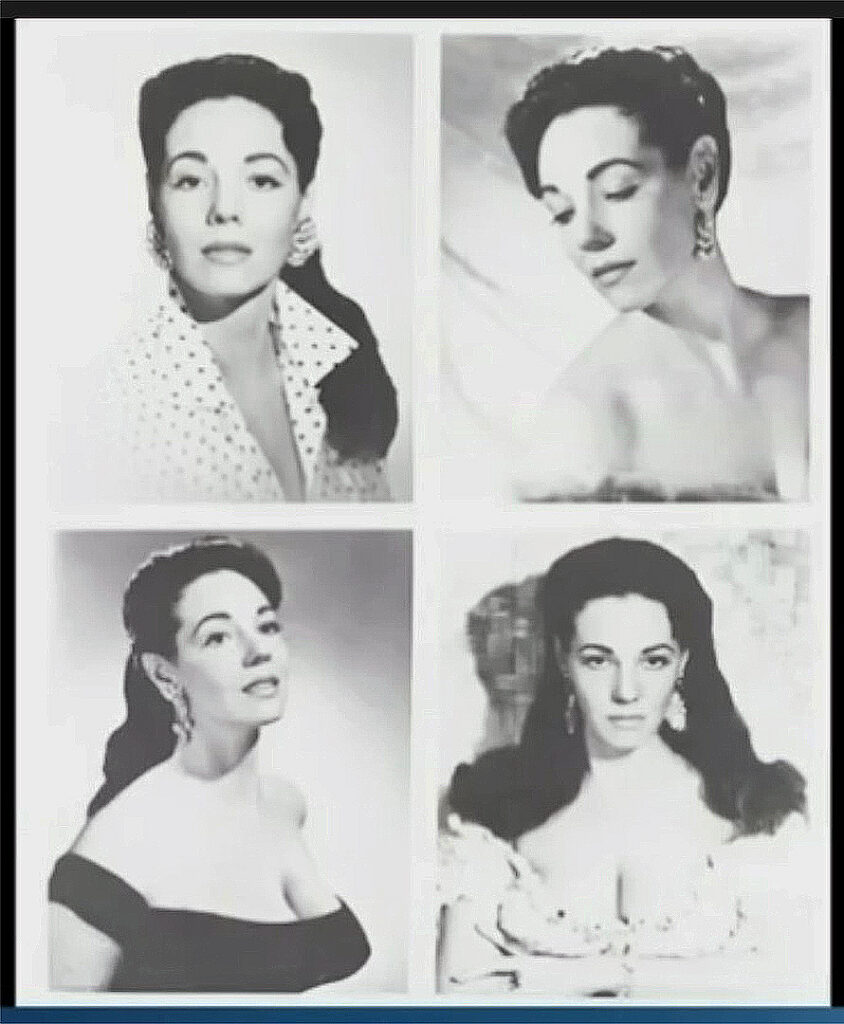
Some of Milicent Patrick’s early Modelling Work


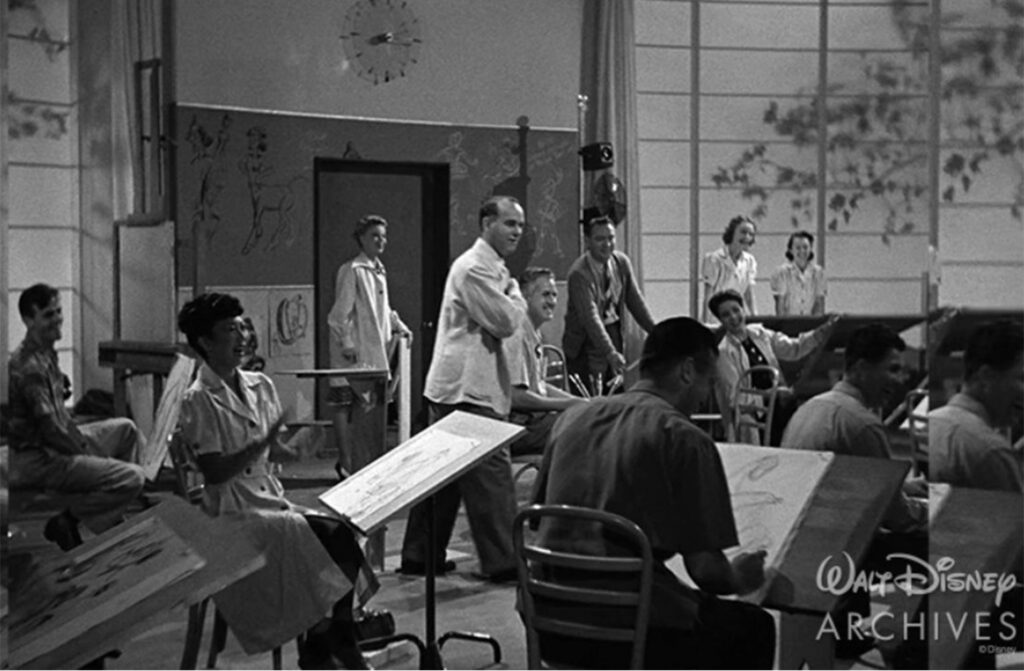
Milicent in the BG as an Extra in the feature ‘ The Reluctant Dragon ‘ 1941

Copyright : Disney Studios Inc.

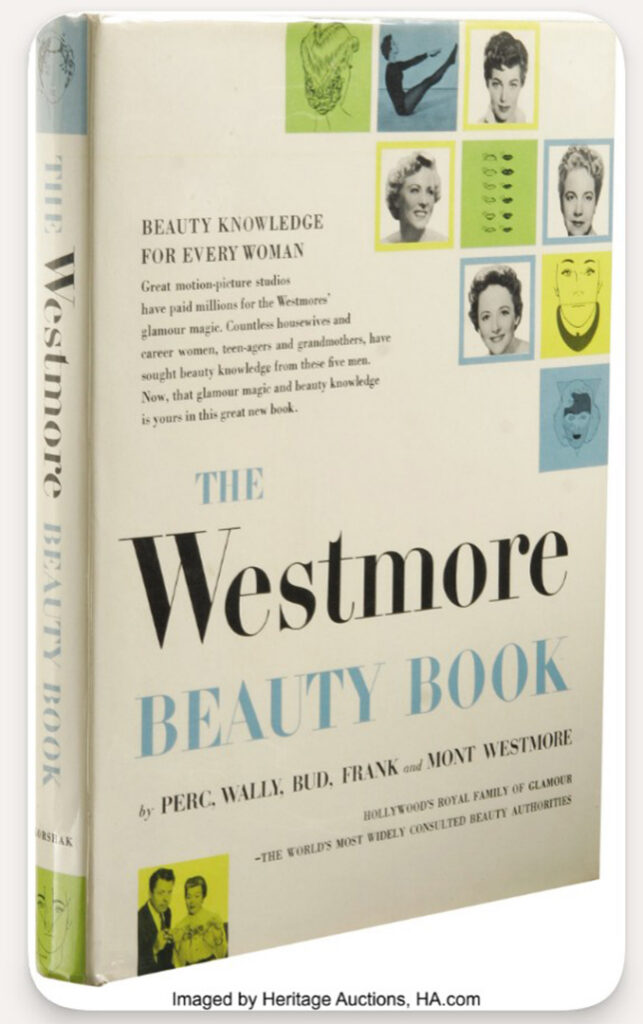
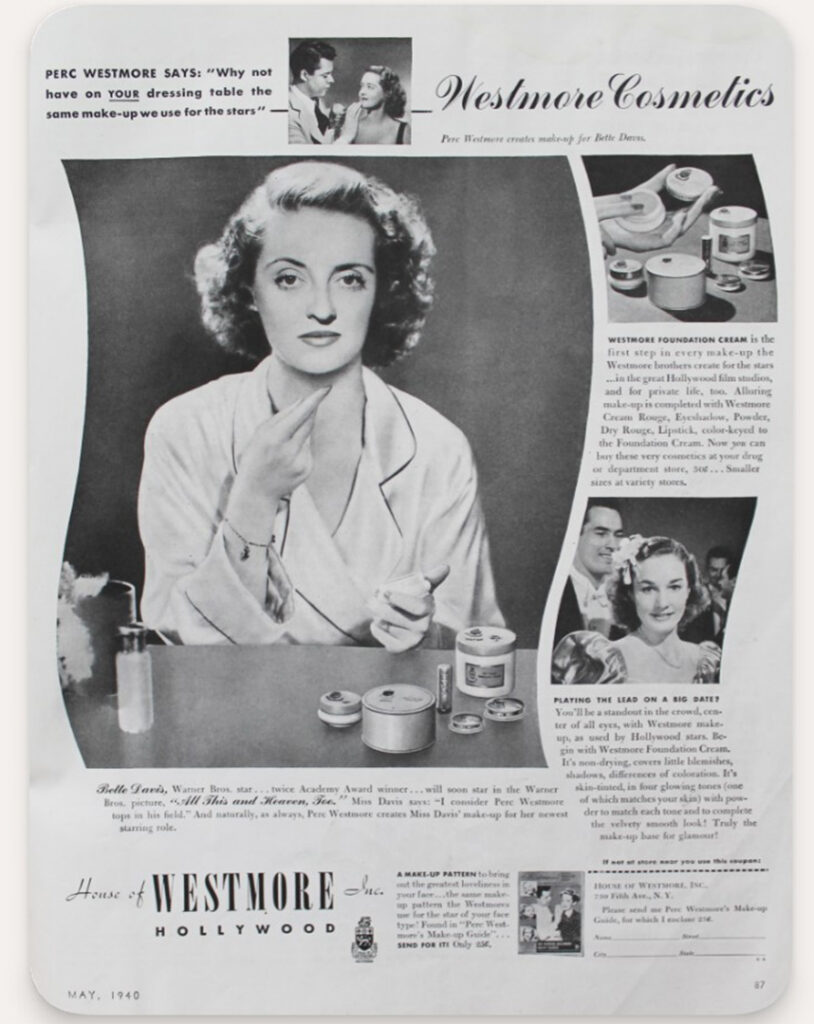
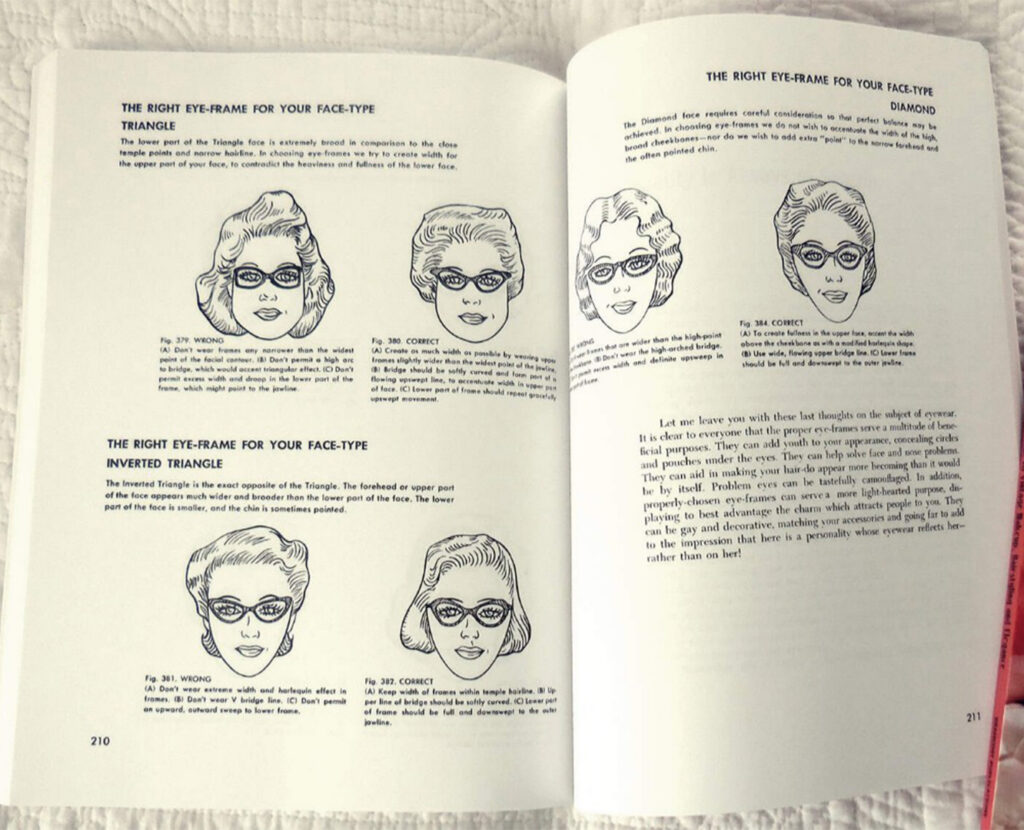
The Westmore Beauty Book – 1950’s


Bud Westmore with Milicent Patrick at work – Universal Studios


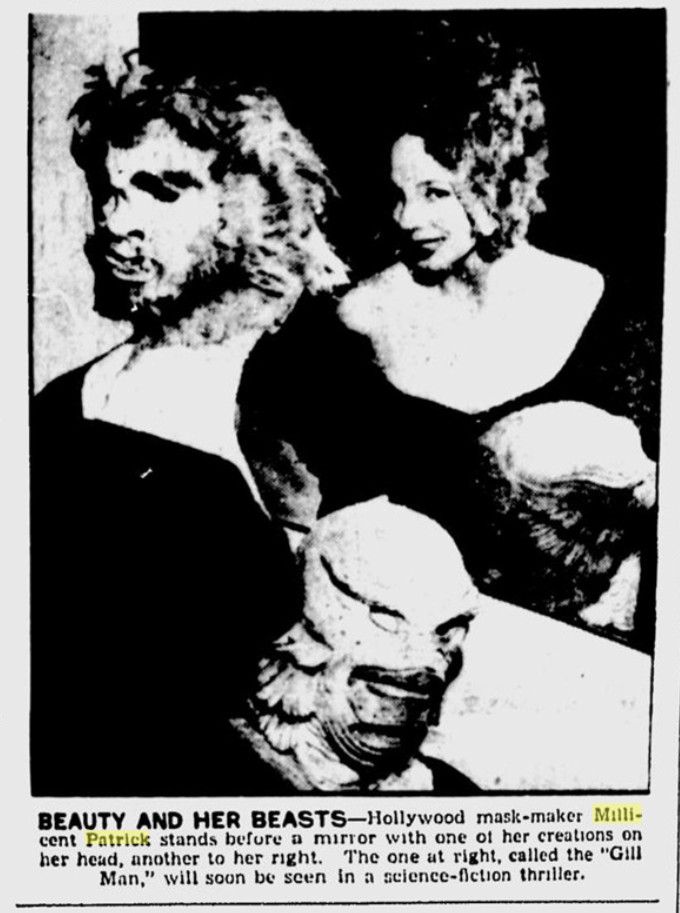
Beauty and Her Beasts – Newspaper Article about Milicent Patrick
The Mount Airy News, Mount Airy, Surry County, North Carolina
March 12th 1954


Views: 327
MEMORY LANE # 14 : ANIMATORS FOOTAGE CHARTS – 1986 Don Bluth Studios –

MEMORY LANE # 14 : ANIMATORS FOOTAGE CHARTS – 1986 Don Bluth Studios –

July 25, 2026 Mark Pudleiner

Spring 1986 — During production on Don Bluth’s second theatrical feature, An American Tail, Key Clean‑Up Artist Mark Pudleiner films his college friend, Junior Animator Ralph Zondag, as he explains the studio’s Animation Footage Charts. These charts, posted in the central workspace known as the “Music Room” near Don’s office, tracked the weekly footage approved by Don as the team pushed to stay on schedule. Ralph walks through how the numbers worked and even touches on what a rookie animator was earning during that spring of ’86.

ANIMATORS FOOTAGE CHARTS – 1986 Don Bluth Studios

SHOW NOTES :

Below is the list of the American Tail Character Animators that are listed on the Animation Weekly Footage Chart as shown in the video :

John Pomeroy
IMDB – LINK
LinkedIn – LINK

Dave Molina
IMDB – LINK
LinkedIn – LINK

Gary Perkovac
IMDB – LINK
LinkedIn – LINK

Jesse Cosio
IMDB – LINK

Jorgen Klubien
IMDB – LINK
LinkedIn – LINK

Dan Kuenster
IMDB – LINK

Jeff Etter
IMDB – LINK
LinkedIn – LINK

Kevin Wurzer
IMDB – LINK

Ralph Palmer
IMDB – LINK
LinkedIn – LINK

Ralph Zondag
IMDB – LINK
LinkedIn – LINK

Linda Miller
IMDB – LINK
LinkedIn – LINK

Lorna Cook
IMDB – LINK
LinkedIn – LINK

Anne Marie Bardwell
IMDB – LINK
LinkedIn – LINK

Heidi Guedel
IMDB – LINK

Dave Spafford
IMDB – LINK

Skip Jones
IMDB – LINK
LinkedIn – LINK

Dick Zondag
IMDB – LINK
LinkedIn – LINK

T Dan Hofstead
IMDB – LINK
LinkedIn – LINK


Views: 349
Meeting with Mathieu 14 – Siren’s Call – by Sagpi

Meeting with Mathieu 14 – Siren’s Call – by Sagpi

July 18, 2026 Mark Pudleiner

Episode 14 of Meeting with Mathieu takes a darker turn as Mathieu shows his dad Siren’s Call, an intense animated short by Sagpi. They dig into the design decisions that shape its mood — and how those choices heighten the emotion and violence on screen.

Siren’s Call by Sagpi

SHOW NOTES :

‘ Siren’s Call ‘ – Original Video by Sagpi > LINK

From the Artist :

It takes sweat and effort to climb oneself all the way up to goodness. it only takes gravity to fall back into the hole. and sometimes, while one is climbing, the darkness below sings a sweet siren song that makes the light above seem so bitter…


SAGPI LINKS :

YouTube Channel > LINK

Instagram > LINK

TikTok > LINK

Spotify > LINK

Tumbler > LINK

Books for Sale > LINK


Views: 343

Posts pagination

1 2 … 5 Next

CATEGORIES :

  • Animation Breakdown
  • Main Articles
  • Meeting with Mathieu
  • Memory Lane
  • Special Message
  • October 2026
  • September 2026
  • August 2026
  • July 2026
  • June 2026
  • May 2026
  • April 2026
  • March 2026
  • February 2026
  • January 2026
  • October 2025
  • September 2025
  • MEMORY LANE # 17 : TARZAN APPRECIATION LUNCH PART 3 – The Limo Ride – November 11th 1998
  • Meeting with Mathieu 16 – GHOST IN THE SHELL – 2026
  • MEMORY LANE # 16 : JOHN POMEROY – 1988 – ALL DOGS GO TO HEAVEN – Clean Up Notes – Part 1
  • Meeting with Mathieu 15 – Caleb Natale : Visual Effects Artist
  • SPECIAL MESSAGE # 1 : FROLLO in Vancouver !

Most Viewed Posts

  • Jan 15 – Education for Death – Walt Disney’s 1943 short (3,700)
  • Contact Animation Today with Mark Pudleiner (3,269)
  • Meeting with Mathieu 11 – Simulator : the first person show – by Skull Mug (2,376)
  • MEMORY LANE # 1 – Dorse Lanpher 1986 (926)
  • ANIMATION BREAKDOWN # 3 : Superman vs. Nick O’Teen – 1982 (886)
YouTube Channel - Click link below :

  • YouTube
© 2026   All Rights Reserved.